
- Home
- Products
- Industrial Fluid Rubber Hose
- Water Hose
- Seawater Intake Hose
Seawater Intake Hose
Seawater uptake hose for offshore aquaculture cooling systems
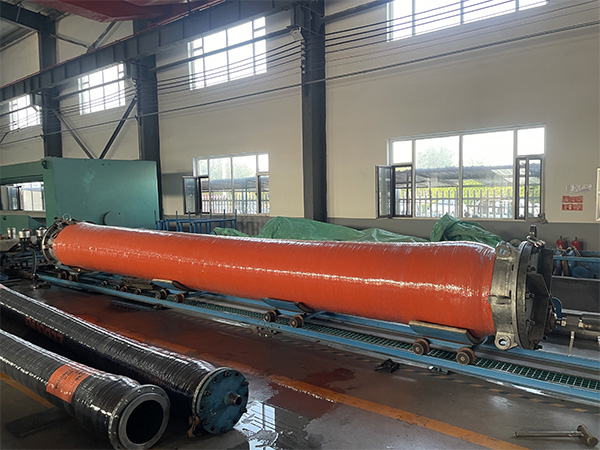
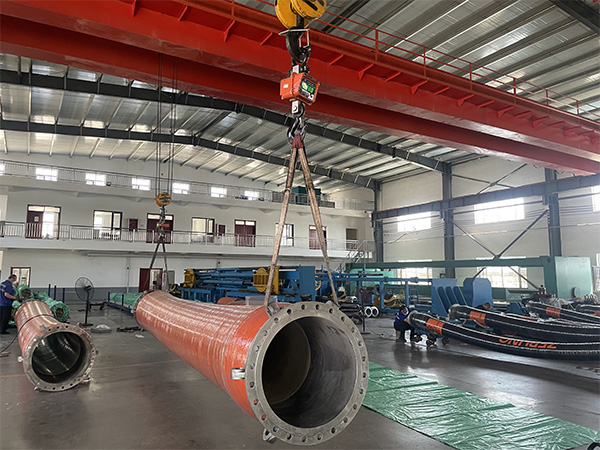
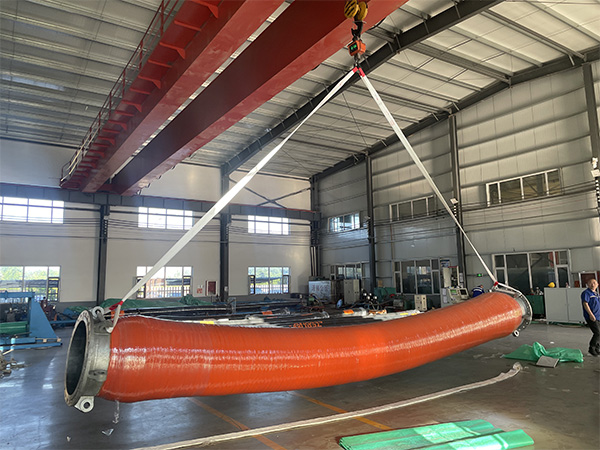
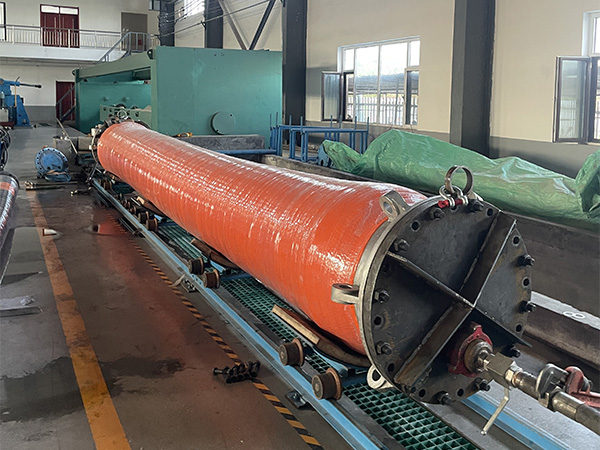
- Offshore fish-farming vessels, deep seawater intake for summer temperature management for cold-water fish such as salmon and rainbow trout
- Cold-water supply systems for large offshore aquaculture cages or fish net pens
- Deep seawater supply for temperature management in marine aquaculture facilities
- Complete piping systems for deep seawater intake in turnkey aquaculture projects
Designed to support temperature management when ambient seawater temperatures are elevated during the summer months, our seawater intake hose for offshore aquaculture can be deployed to intake depths of several dozen meters below the sea surface, tailored to project requirements. These seawater delivery hoses, as a part of a seawater intake system, are used to convey cold seawater from deeper layers to aquaculture tanks or offshore net pens. This can support water temperature management for cold-water fish such as salmon and rainbow trout. The seawater intake hoses are ideal for fish-farming vessels, large offshore net pens, and other various offshore aquaculture projects.
- The seawater intake hose features flexible construction, allowing it to accommodate movement caused by waves, tides, vessel motions, helping reduce the risk of hose damage and connection leakage while facilitating offshore deployment, retrieval, and maintenance.
- Made with a special seawater-resistant rubber compound, the water intake hose resists seawater exposure and UV ageing. Its reinforced hose construction is designed to withstand repeated bending fatigue and maintain structural integrity during prolonged immersion in seawater, potentially reducing long-term operating and maintenance costs.
- Each rubber hose is engineered to suit the project’s water intake depth, required flow rate, ocean currents, wave height, installation method, and overall hose layout. The internal diameter, individual hose section length, pressure rating, buoyancy modules, flanges and quick-connect couplings can be customized to match the seawater intake system, allowing connection with pumps and aquaculture tanks.
- Low flow resistance in the suction hose reduces energy consumption for water intake. The smooth inner lining helps reduce pressure loss during seawater conveyance, reducing pump energy consumption and potentially lowering electricity costs over the long term.
- Inner Lining: Seawater-resistant rubber lining with a smooth bore to help reduce flow resistance, and minimize leaching of harmful substances into aquaculture water systems
- Multilayer Reinforcement: High-strength textile and steel-wire reinforcement, capable of withstanding the specified suction, external-pressure and internal-pressure conditions, helps resist hose collapse and bursting, and is designed with an appropriate safety factor
- Outer Protective Layer: Rubber material resistant to seawater, ozone, UV, and abrasion, suitable for applications requiring prolonged seawater immersion and repeated wetting and drying.
- End Connections: Corrosion-resistant metal flanges and end fittings bonded to the hose through vulcanization to help prevent separation and leakage;
Our seawater intake hoses are custom-engineered to suit project-specific operating conditions and installation requirements. Specifications including intake depth, hose diameter, hose section length, working pressure, ocean current conditions, buoyancy configuration, flange connections, and other data can all be tailored to the project plan.
- Operating Conditions Review: Collect and review project data including intake depth, required flow rate, sea conditions, wave height, installation method, pump specifications
- Engineering Design: Our technical team develops configuration proposals for hose construction, dimensions, pressure rating, and other specifications
- Drawing Approval: Design drawings and technical specification sheets are provided, followed by a technical review by both parties
- Manufacturing and Factory Pressure Testing
- Installation Support: Provide technical guidance for installation, and on-site technical coordination with the project team is available


